AI Agents for Small Business: Why the Agent Is Never the Problem
An AI agent handed an undocumented mess does not clean it up, it runs the mess faster and at scale, then gets blamed for a problem it did not create. Before turning an agent loose, pick one process, document it for a first-day hire, validate it by doing only what the written steps say, and audit the folders, file names, and rules the agent will operate inside, the same three fixes Mike made to his own file system before building his first two agents.
Prefer to listen?
Listen to the episode: AI Agents and Burnout: Why the Work Pile Does Not Have to Stay Yours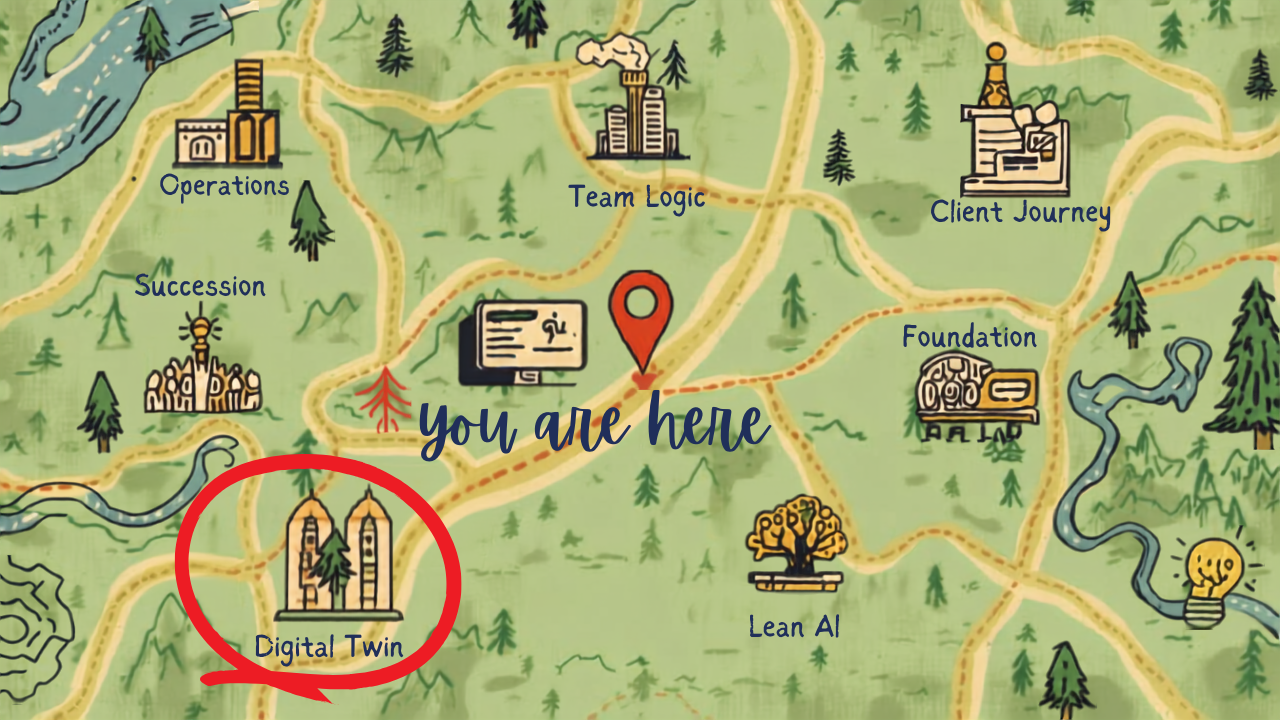
Every small business owner who has watched an AI agent demo wants the same thing. An agent that reads the inbox, drafts the follow up, files the paperwork, and clears a piece of the backlog before the day even starts. Before you look seriously at AI agents for small business, there is one question worth asking first. What happens when the agent is handed the same undocumented mess a new hire would inherit? That is exactly what happens in most first attempts, and it is why an agent gets blamed for a problem it did not create.
The Real Problem Is Never the Agent
An agent handed a task does not clean up the environment around it. It works with what it finds. If the process is unclear and the files are scattered, the agent produces an unclear and scattered result, only faster and at a larger scale than one person could manage alone.
This mirrors a lesson from Lean manufacturing. A business does not put a robot at the end of a broken production line and expect the robot to fix the line. The line gets fixed first, then the robot runs the corrected process. AI agents work exactly the same way. They execute what is in front of them. A clear, documented process gets run well. An unclear process gets run at speed, and the mess that was already there does not shrink. It multiplies.
This is not a knock against the technology. The demos are not lying. The capability is real, and so is the burnout small business owners are trying to solve with it. Repetitive tasks, follow ups that fall through, decisions that should not require an owner personally, all of that is genuinely a good fit for an agent, provided the work handed to it is already defined.
What I Learned Rebuilding My Own File System
Before I built my first two agents, I sat down and looked honestly at my own file structure. What I found was a system built for a person, specifically for me, not for a machine. Folders were nested six and seven levels deep. File names made complete sense to me and would have meant nothing to an agent trying to locate the right document. I knew exactly where everything lived, and that was the problem. My knowledge was the system.
I made three changes before I built a single agent. First, I capped folder depth at four levels. If a file could not be found within four clicks from the top, the structure itself was wrong, not the person searching. Second, I created a firm naming convention for every file type, a rule rather than a guideline, with no exceptions. Third, I wrote a plain language file of agent rules that any agent in my environment has to follow: where files belong, what to do when something is unclear, and one rule that never bends. The agent can archive a file. It cannot delete one.
This connects to what I call the Digital Twin pillar at Thotos, a documented, navigable version of the business that exists outside of any single person's head. When that documentation is solid, an agent can operate inside it. When it is not, the agent is guessing, and it will not tell you that it is guessing.
Where to Start With AI Agents for Small Business
If you are ready to put an agent to work, follow this sequence in order.
Pick one process. Not the whole operation, one task that repeats, takes real time, and has a clear output you could describe completely to someone with no background in the work.
Document that process fully. Write every step, every file involved, and every decision point. Write it for a person on their first day who knows nothing about how the work actually gets done.
Validate the process before you touch a tool. Read each step aloud and do only what it says, nothing more. Note every gap: assumed knowledge, a missing instruction, a file referenced but never named. This step gets skipped more than any other, and it is the one that determines whether the agent works.
Audit the environment the agent will operate inside. Check folder depth, naming consistency, and whether the data involved is clean and accessible. Write down the rules the agent has to follow before it runs its first task.
The Step Most Owners Skip
Documenting a process and validating one are different tasks, and the difference is where most first attempts at AI agents for small business fail. Documentation is writing down what you believe happens. Validation is walking through the process exactly as written and finding out what is actually true.
A person doing a task fills in gaps automatically, because they have done it before and understand the context around it. An agent does not have that context. It either follows exactly what is written, or it stops, or it guesses, and a guess can travel through several steps before anyone notices the output is wrong. The validation walk-through feels slow and a little tedious. It is also the fastest path to an agent that actually works, because everything built after it stands on a foundation that has already been tested.
An AI agent will always do exactly what the process says, not what the owner meant, and the businesses getting real value from agents right now are the ones who did the unglamorous work of writing that process down and testing it before they ever turned an agent loose on it.